
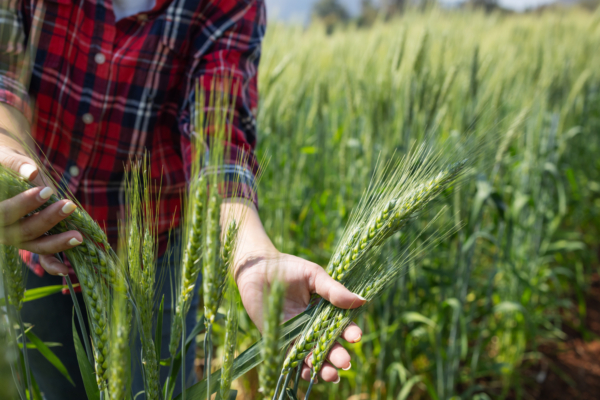
For decades, enriching staple crops with micronutrients was often treated as a specialized goal in plant breeding. That approach is changing as wheat breeders with CGIAR, the International Maize and Wheat Improvement Center and national breeding programs integrate zinc enrichment directly into elite wheat lines.
The shift marks a change in breeding strategy, with zinc now built into the foundation of new wheat varieties rather than added later as a separate trait. Researchers say the approach allows breeders to focus on other priorities such as higher yields, disease resistance and climate resilience while maintaining nutritional targets.
Zinc is a critical mineral for human health, second only to iron in abundance among trace minerals in the body. It supports immune function, gene expression, hormone regulation and tissue repair. Deficiencies can lead to stunted growth, cognitive delays and weakened immune systems, particularly in children.
Globally, about 2 billion people are affected by zinc deficiency, with some of the highest rates found in South Asia, sub-Saharan Africa and Central America.
Researchers say biofortification offers a scalable way to address what is often called hidden hunger, or micronutrient deficiencies that persist even when calorie needs are met. In wheat, one of the world’s most widely consumed staple grains, boosting zinc levels can increase dietary intake without requiring major changes in food preparation or consumption.
In many countries, wheat provides between 30% and 40% of daily caloric intake, making it a key target for nutritional improvement.
South Asia has become an early testing ground for the strategy. In Pakistan, where wheat consumption averages about 130 kilograms per person annually, scientists have released five zinc-enriched wheat varieties.
One of the most widely adopted is Akbar-19, which now covers about half of Pakistan’s wheat acreage. The variety combines higher zinc content with high yields, lodging resistance, disease tolerance and strong chapati quality.
Across India, Nepal and Bangladesh, more than two dozen high-zinc wheat varieties developed through CGIAR research have been released and adopted, covering more than 6 million hectares.
In India, the variety Ninga has gained attention for its combination of high yield, climate resilience and grain zinc levels about 30% higher than conventional wheat.
Previously, zinc biofortification was managed as a separate breeding track. Under the new mainstreaming approach, nutrient-rich traits are incorporated directly into elite breeding material from the start. That allows breeders to combine nutritional benefits with agronomic traits farmers prioritize, including yield potential, disease resistance and adaptation to local growing conditions.
The strategy is also being explored for other staple crops as breeding programs look for ways to combine nutrition and productivity.
Researchers note the work carries added urgency as climate change advances. Studies indicate rising carbon dioxide levels by 2050 may reduce zinc concentrations in cereal crops, potentially increasing nutritional risks in regions that rely heavily on grain-based diets.
CIMMYT’s wheat breeding programs have reported gains of about 2% per year in both grain yield and zinc content over the past five years, demonstrating that productivity and nutritional quality can improve at the same time.
For millers and the broader wheat supply chain, the development of zinc-enriched wheat could expand opportunities to deliver more nutrient-dense flour while maintaining the performance characteristics demanded by growers, processors and consumers.
Source: CGIAR, "You can’t see it, but it can change lives: the story of zinc-enriched wheat"