
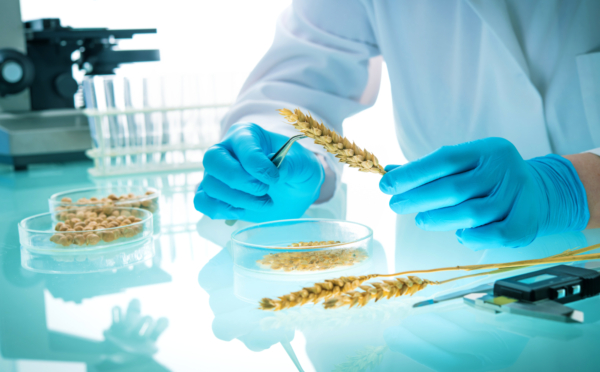
Advances in genomics, accelerated breeding, disease resistance, physiology and agronomy are helping scientists at CIMMYT’s Sanjaya Rajaram Experimental Station in Toluca, Mexico, develop wheat varieties and production strategies designed to address emerging challenges.
Wheat production faces increasing pressure from evolving diseases, drought, heat, water scarcity, salinity, rising production costs and changing quality requirements. Developing new sources of disease resistance and better-adapted varieties requires years of research, making the ability to anticipate threats and develop solutions before they become critical increasingly important.
Those efforts were highlighted during the CIMMYT Wheat Field Day at the Sanjaya Rajaram Experimental Station under the theme “Future-proofing Wheat: Accelerating Disease Resistance for Global Food Security.” The event brought together scientists, farmers, government representatives, embassies, investors, agrifood companies and research partners to examine how wheat research conducted in Mexico contributes to global efforts to protect production.
Participants explored how genetic diversity, genomics-based pre-breeding, accelerated breeding, bread and durum wheat improvement, disease resistance, physiology and sustainable agronomy contribute to wheat improvement.
CIMMYT conserves approximately 120,000 wheat accessions, providing researchers with genetic diversity that can be examined for traits including disease resistance, drought and heat tolerance and nutrient-use efficiency.
Genomics-based pre-breeding helps scientists identify useful traits from diverse genetic materials and transfer them into germplasm that can be used by breeding programs. Current priorities include resistance to rusts, Fusarium head blight, wheat blast and Septoria, as well as agronomic and physiological traits that can improve crop performance.
Controlled-environment facilities in Toluca help accelerate the advancement of wheat generations through extended periods of light, controlled temperatures, dense planting and early seed harvesting. Selected materials are then evaluated in the field for targeted traits, agronomic performance and grain yield. Combining these approaches can shorten breeding cycles and reduce the time needed to advance promising genetic material.
The Sanjaya Rajaram Experimental Station also plays a role in wheat disease research. Conditions in Toluca allow researchers to evaluate materials against diseases including yellow rust, Septoria and Fusarium head blight and identify and combine new sources of resistance.
Because wheat pathogens continue to evolve, maintaining resistance requires continuous evaluation, disease characterization and access to genetic diversity. Research in Toluca is connected with international testing environments and national breeding programs. Across CIMMYT’s global network, more than 100,000 advanced wheat lines are evaluated annually, enabling researchers to test promising materials under diverse conditions and share knowledge and germplasm among partners.
These capabilities also support disease surveillance and early-warning efforts. Linking field observations, disease characterization, international research networks and genetic sources of resistance can help countries identify emerging threats and prepare responses before outbreaks affect production and food security.
The Field Day also highlighted research into how wheat uses water, light and nutrients and how genetic improvements perform under different production systems. Research on biological nitrification inhibition is examining wheat’s ability to influence nitrogen transformations in soil, with potential implications for improving nitrogen-use efficiency and reducing losses.
Research on bread wheat, durum wheat and triticale also links genetic improvement with quality, processing and agrifood value chains, including work relevant to global pasta chains and dairy production systems.
Moving research from experimental stations to farmers depends on regional evaluation and validation, collaboration with national research institutions and effective public and private seed multiplication systems. Plant health institutions, producers and the agrifood industry also help connect research with production needs, quality requirements and markets.
Research conducted at CIMMYT’s headquarters in the State of Mexico and experimental stations such as Toluca is connected to national institutions and a global network of wheat research and breeding programs. Maintaining that capacity requires long-term collaboration and investment in germplasm, infrastructure, specialized scientific teams and evaluation networks.
For Mexico and other wheat-producing countries, these capabilities provide a platform for collaboration on research, plant health and food security. Through CIMMYT’s global networks, germplasm, knowledge, methodologies and tools developed in Mexico can be shared as global public goods, extending their value to farmers and food systems across regions.
The research presented in Toluca demonstrates how sustained scientific efforts can shorten the time between identifying a threat and developing a response. As pressures on wheat production continue to evolve, maintaining that research capacity will be important to protecting future harvests and supporting global food security.
Source: CIMMYT, "Future-proofing wheat: science from Mexico for global food security"