
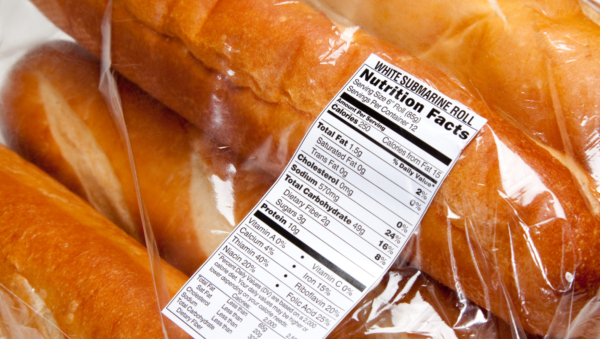
A shift from enriched to unenriched flour in common bread-aisle foods could substantially reduce Americans’ intake of several B vitamins and iron, according to a new modeling analysis from the Grain Foods Research Institute (GFRI).
The white paper examines a hypothetical reformulation of five categories: bagels and English muffins, flatbread and pita, wheat flour tortillas, white rolls and white bread. Together, those foods account for nearly 40% of refined grain consumption in the United States, making them a significant delivery system for nutrients added through flour enrichment and fortification.
For millers, the findings highlight a familiar process with broad public health implications. Enrichment traditionally refers to adding thiamin, riboflavin, niacin and iron to refined flour, replacing nutrients lost when the bran and germ are removed during milling. Folic acid is added through fortification. For simplicity, the report uses “enrichment” as an umbrella term for all five nutrients.
The analysis comes as food manufacturers face pressure to simplify ingredient lists and respond to consumer concerns about refined grains and “ultra processed” foods. GFRI cautions that removing enriched flour to support a cleaner-label position could carry unintended nutritional consequences, especially if products continue to look and function much as they do today but no longer provide the same micronutrients.
Researchers began with federal dietary data showing that Americans ages 1 and older consume an average of 5.7 ounce-equivalents of refined grains a day. The five bread-aisle categories included in the model account for 2.21 ounce-equivalents. White rolls represented the largest share, followed closely by white bread and wheat flour tortillas.
Daily averages were 0.67 ounce-equivalents for white rolls, 0.64 for white bread, 0.62 for wheat flour tortillas, 0.22 for bagels and English muffins and 0.06 for flatbread and pita. Although no single category reached 1 ounce-equivalent daily, their combined reach made the nutrient contribution substantial.
The researchers used nutrient values from USDA FoodData Central and consumption information from federal dietary databases. They then calculated the nutrients supplied by enriched versions of the products. To create hypothetical unenriched versions, they subtracted the amounts of thiamin, riboflavin, niacin, iron and folic acid provided under the federal standard of identity for enriched flour.
At current consumption levels, the enriched products provide 21% of mean daily thiamin intake, 19% of folate, 15% of iron, 11% of niacin and 9% of riboflavin, the report found. In the unenriched model, those contributions fell to 7% for thiamin, 4% each for iron and niacin, 2% for riboflavin and 1% for folate.
The comparison was similarly pronounced when measured against recommended intake. Depending on the nutrient and sex, enriched bread-aisle foods supplied 12% to 30% of adults’ recommended intake for the five nutrients. Without enrichment, the modeled contribution fell to 2% to 9%.
Folate and iron are of particular concern because some groups already fall short. The white paper notes that about one-third of girls ages 14 to 18 and one-quarter of women ages 18 to 50 have usual folate intake below the estimated average requirement. At least 1 in 5 females ages 14 to 50 also consume too little iron. Adequate folate before and during early pregnancy is important in reducing the risk of neural tube defects.
The report places those findings in the historical context of flour enrichment. Bakers began voluntarily enriching refined flour in the 1930s as the country confronted diseases caused by B-vitamin deficiencies. Federal standards followed in the 1940s, and folic acid was added to the standard of identity in the 1990s. GFRI cited federal estimates that mandatory folic acid fortification prevents approximately 1,300 neural tube defect-affected births annually.
GFRI argues that nutrition guidance and product discussions should distinguish staple refined grain foods from indulgent products that may contain more added sugars or saturated fats. Bread, tortillas and pita often serve as affordable components of meals and as carriers for vegetables, dairy, beans and lean protein. They also have important roles in cultural and family food traditions.
The analysis does not predict that manufacturers will broadly eliminate enrichment, nor does it measure health outcomes following an actual reformulation. It models the nutrient contribution that would disappear if enriched flour in the selected products were replaced entirely with unenriched flour while other dietary factors remained unchanged.
For the milling and baking industries, that distinction is important. Reformulation decisions involving enriched flour reach beyond processing performance, ingredient declarations and marketing claims. Because staple grain foods are consumed widely and consistently, even small formulation changes can affect nutrient intake across a large population.
The report concludes that enrichment and fortification remain important public health tools and calls for clearer communication about the different nutritional roles of refined grain foods. Its central message for the grain-based foods sector is straightforward: Removing enrichment from familiar staples may simplify a label, but it also removes nutrients those products have delivered for generations.
Source: Grain Foods Research Institute, “Modeling the Contribution of Enrichment and Fortification to B Vitamin and Iron Intake in the US Population,” 2026.