
How Next Generation Horizontal Unloading Systems Are Redefining Control, Protection, and Uptime
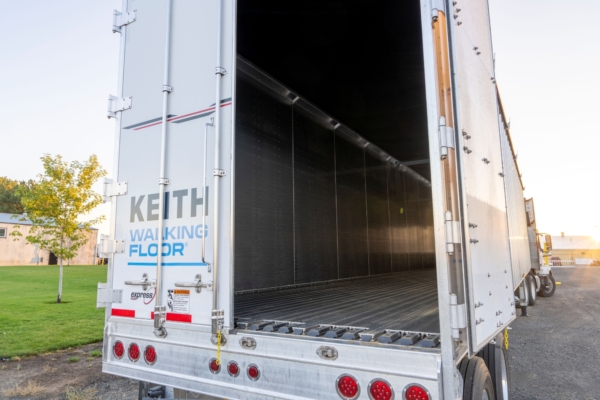
RX-equipped Keith Walking Floor trailer automates high-volume loading and unloading to keep bulk material operations moving.
Credit: KEITH Manufacturing Co.
At a mill, the performance of a bulk trailer is not measured only by how much it carries. How quickly and safely it unloads also affects cycle times, maintenance demands and long-term operating costs.
That makes the unloading system an important consideration for operations moving grain and other bulk materials. Payload capacity and trailer configuration may receive much of the attention, but the system beneath the load determines how material leaves the trailer and how soon the equipment can return to service.
Horizontal unloading systems changed bulk transport by eliminating the need to raise a trailer during discharge. A hydraulically powered moving floor walks material out while the trailer remains level. This provides greater stability and allows unloading where overhead clearance or ground conditions can make tipping impractical or unsafe.
With stability established as the fundamental advantage, the technology is entering a more refined stage. Newer drive systems focus on simplifying operation, protecting hydraulic components and reducing maintenance time.
From Durability to Serviceability
Early horizontal unloading systems were built primarily around mechanical strength. Heavy hydraulic components, proven cylinder arrangements and rugged hardware allowed the equipment to perform in demanding environments and helped establish moving-floor trailers as a dependable alternative to dump configurations.
Strength remains essential, but expectations have expanded as fleets have grown and maintenance windows have tightened. Operators now want equipment that is easier to understand, diagnose and repair. Reliability includes how quickly a technician can identify a problem, replace a component and return the trailer to operation.
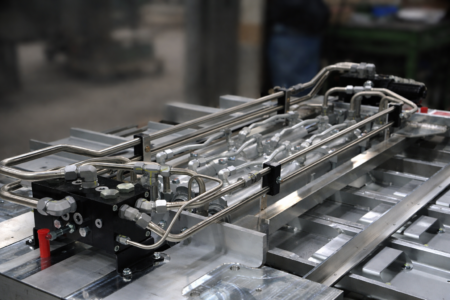
Newer drive designs reflect this broader definition. Simplified controls can reduce operator confusion and training time. Standardized hydraulic layouts make components easier to identify and stock, while modular valve systems allow individual parts to be replaced without dismantling surrounding plumbing. Hydraulic lines also can be designed for easier transport and replacement.
For a high-cycle fleet, even modest reductions in service time can produce meaningful uptime gains when multiplied across trailers and repeated unloading cycles.
Protecting Hydraulic Performance
Clean oil and controlled temperature are critical to hydraulic performance. Contamination and excessive heat can accelerate wear, reduce efficiency and shorten component life.
Managing those risks once depended heavily on operator attention and scheduled maintenance. Newer drive architectures increasingly incorporate protection into the system itself.
Integrated check valves can help prevent damage from incorrect hydraulic hookups. Temperature switches and heat sensors can stop operation before thermal stress creates additional problems. Inline filtration with visible indicators can alert maintenance teams when service is needed, supporting preventive maintenance rather than waiting for a failure.
Reducing internal hydraulic restriction also can limit heat generation at its source. These features recognize the realities of daily operation, including hookup errors, environmental stress and inconsistent maintenance intervals. They do not replace routine service, but they can help prevent avoidable damage.
Selecting a Drive for the Material
Versatility has long distinguished moving-floor trailers. The systems can handle grain, other agricultural products and irregular loads while maintaining trailer stability.
The traditional trade-off has been discharge speed. Belt trailers may unload some commodities faster, but changes in cylinder count and drive cycling patterns are helping horizontal systems narrow that gap.
Two-cylinder configurations can achieve faster cycling rates than traditional three-cylinder arrangements. That can make them suitable for lighter bulk commodities when rapid turnaround is a priority. Three-cylinder systems remain appropriate for heavier applications in which load control and durability take precedence.
This allows operators to select a system according to the material being transported rather than applying one configuration to every load. The application-specific approach strengthens the case for horizontal unloading in agricultural markets where speed, versatility and stability must coexist.
Controls Expand the Safety Advantage
Electric controls are further changing how operators interact with moving-floor systems. Electrification does not alter the cycling action of the floor, but it creates opportunities to integrate additional safeguards.
Push-button controls simplify operation. Door-position switches can prevent the floor from activating unless the rear doors are open, while restart requirements following a power interruption can reduce unintended movement. Remote capability may allow an operator to remain in the cab during unloading, an advantage at facilities that limit access near moving equipment.
KEITH’s RX platform illustrates this transition. Developed as an evolution of the company’s RUNNING FLOOR II DX drive, the platform combines electric controls with reduced hydraulic restriction, integrated filtration, over-temperature protection and safeguards against improper hookups. Cartridge-style valves allow individual components to be replaced without disassembling adjacent plumbing. Two- and three-cylinder versions address different materials and operating priorities.
The underlying advantage of horizontal unloading has not changed: The trailer remains firmly on the ground. What is changing is the sophistication of the system that delivers that stability.
As safety requirements, labor constraints and uptime pressures influence equipment decisions, the drive system is becoming a more strategic part of trailer selection. Performance will be judged not only by how much material a trailer carries, but by how safely, efficiently and reliably the unloading system prepares it for the next load.