
Researchers from across Tanzania have received training in a rapid, low-cost testing method to detect wheat blast, a fungal disease that threatens wheat production and has been confirmed in neighboring Zambia.
The training, led by researchers from the John Innes Centre and hosted at the Tanzanian Agricultural Research Institute (TARI), introduced loop-mediated isothermal amplification (LAMP) assays. The tests can help researchers identify the fungus responsible for wheat blast, Magnaporthe oryzae pathotype Triticum, before the disease becomes established in Tanzania.
Although wheat blast has not been detected in Tanzania, its presence in Zambia raises concerns about the potential spread of the disease into the country. Early detection would help researchers and agricultural authorities respond quickly to an outbreak and protect wheat harvests.
Twenty-one representatives from five Tanzanian institutions participated in the training. The workshop also provided resources for the researchers to test suspected wheat blast samples during the coming growing season.
The findings will be connected to the Disease Early Warning Advisory System (DEWAS), a global surveillance network that monitors wheat diseases and supports efforts to develop effective control measures.
The next step in developing the technology is to create tests that do not require heating or refrigerated reagents, which would make wheat blast diagnostics more accessible to researchers working in rural areas.
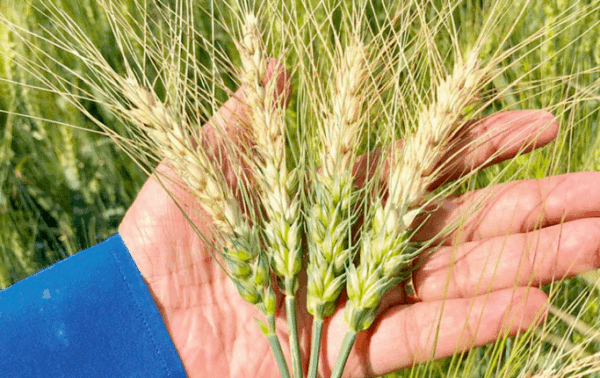
Wheat blast first emerged in Brazil in 1985 and thrives in warm, humid conditions. The disease causes diamond-shaped lesions on wheat leaves, bleached wheat heads and shriveled or undeveloped grain. Severe outbreaks can result in yield losses of 50% to 100%, threatening farmers' livelihoods and local food security.
The fungus can spread through spores carried by infected grain, animals and human activities, including trade. Since its emergence in South America, wheat blast has spread to other countries and was confirmed in Bangladesh in 2016. The disease reached Africa in 2018, when it was identified in Zambia's Mpika District before spreading to neighboring districts.
Tanzania's proximity to affected areas in northern Zambia increases the risk of the disease crossing the border. Rapid and accurate detection is important because wheat blast can be mistaken for Fusarium head blight, another fungal disease that causes bleached wheat heads and shriveled grain.
Fusarium head blight has been present in Africa for decades and has become increasingly common with climate change. Outbreaks can cause yield losses of 10% to 50% and produce mycotoxins that make grain unsafe for human and animal consumption.
Although laboratory and microscopy methods can distinguish the two diseases, they often require specialized equipment and reagents that are difficult to access in resource-limited settings.
The LAMP assays developed by the John Innes Centre's Saunders Lab offer a simpler alternative. Unlike polymerase chain reaction tests, which require a complex and expensive thermocycling machine, LAMP assays can operate using a basic heating plate. The process takes about 30 minutes to one hour at a single temperature.
The tests also use a color-change indicator to identify the presence of wheat blast. Samples change from pink to yellow when the pathogen is detected, giving researchers a clear initial result. More advanced testing can then be used to confirm the finding and identify additional details about the infection.
The assays were developed through the Global Surveillance Advisory System project and are designed to help field laboratories identify suspected wheat blast infections, including cases that might otherwise be mistaken for Fusarium head blight.
Early detection is essential to limiting the disease's spread. Growing resistant wheat varieties and applying fungicides to control infected plants can reduce the number of plants producing spores and help minimize damage during an outbreak.
By equipping Tanzanian researchers with accessible diagnostic tools, the training aims to strengthen the country's capacity to identify wheat blast and respond before the disease threatens wheat production and food security.
Source: John Innes Centre, "New wheat disease detection tool established in Tanzania"